
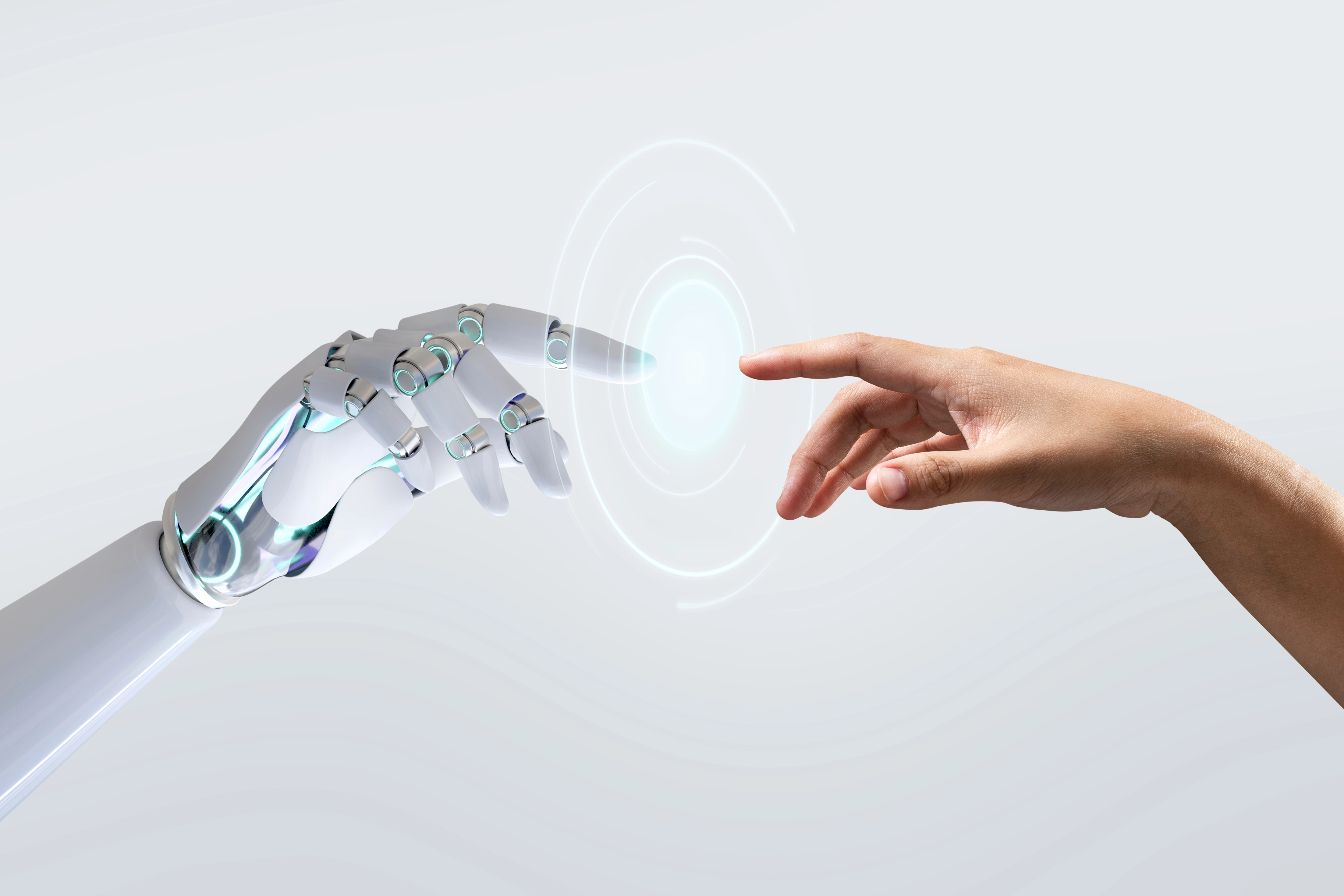
We’re entering an era where almost everything can be generated.
Copy. Concepts. Layouts. Logos. Mood boards. Strategy decks. A hundred options in the time it used to take to write a brief.
When output becomes infinite, taste becomes the scarce resource. So does empathy and the ability to look at a business problem and say "this matters, and that doesn’t".
In an AI-centric world, the advantage isn’t being faster at making things. It’s about understanding what they’re meant to change and how they are meant to make people feel.
Human is the new premium
AI can produce work that looks polished. It can imitate tone. It can generate “brands” that pass at a glance.
It can’t sit in a room with a founder who’s carrying the weight of a business and hear what’s actually being said. It can’t feel when a message is technically correct but emotionally wrong. It can’t understand the nuance of a category or the risk behind a rebrand.
That’s type of work requires the subtlety of human interaction.
And as AI floods the world with generic content, the brands that cut through won’t be the loudest. They’ll be the ones that feel like they care. Like they listen and understand their customers.
The danger isn’t AI. It’s laziness.
Most businesses won’t use AI to create something better. They’ll use it to create more.
More posts. More ads. More landing pages. More noise.
The result is an internet full of competent, polished and completely interchangeable content. When everyone can sound smart, sounding smart stops being enough.
Instead, people will look for:
- a clear stance
- a distinct voice
- a sense of taste
- and proof that you understand the human on the other side of the screen
AI can’t build trust. People do.
In B2B especially, decisions might be backed by data, but they’re still made by humans who don’t want to get burned.
Buyers are asking questions they rarely say out loud:
- Will this team make my life easier?
- Will they show up when things get hard?
- Can I trust them with my reputation?
- Will I regret choosing them?
A “perfect” website doesn’t answer those questions. A human brand does.
The most effective branding work doesn’t just communicate what you do. It reduces uncertainty. It makes the buyer feel understood. It makes choosing you feel safe.
And none of that comes from prompting harder.
So what does “being human” actually look like?
It’s not pretending to be relatable.
It’s this:
Clarity
Say the true thing. Say it simply. Make it easy to repeat.
Specificity
One sharp point of view beats ten generic messages.
Taste
Just because AI can generate 50 options doesn’t mean you need them. You need the right one.
Empathy
Don’t just sell. Understand. Reduce friction. Respect people’s time.
Integrity
Brand has to match reality.
How we use AI at Studio Home
We don’t use AI to replace thinking. We use it to remove drag.
AI is brilliant at accelerating the mechanics of creative work, so we can spend more time on the parts that actually matter: insight, craft and creative direction.
Here’s what that looks like in practice:
Faster exploration
AI helps us explore a wider set of directions quickly. Things like language routes, references, naming patterns. Not so we can pick the most “impressive” option, but so we can find the most strategically sound one sooner.
Covering way more ground upfront, so we have more confidence in the final decision.
Stronger clarity in messaging
We use AI to stress-test messaging:
- Does this sound like anyone else?
- Is it clear in ten seconds?
- What would a skeptic poke holes in?
- What would a buyer repeat in a meeting?
Then we refine: tightening voice, removing fluff, sharpening meaning.
More time for craft
When AI speeds up the repetitive parts, we spend more time where it counts:
- art direction
- typography
- storytelling
- narrative structure
- experience design
- the details people feel but can’t always name
That’s where category defining brands are made.
AI makes our work faster. Being human makes it work.
AI is changing the tools. It’s not changing the job.
The job is still:
- understand the real problem
- make the right strategic call
- build something distinctive and trustworthy
- and help a business show up as itself, consistently and confidently
We use AI to move faster and explore deeper. But the value we bring is human: taste, judgment, empathy and the ability to make the work feel real.